 Skip to content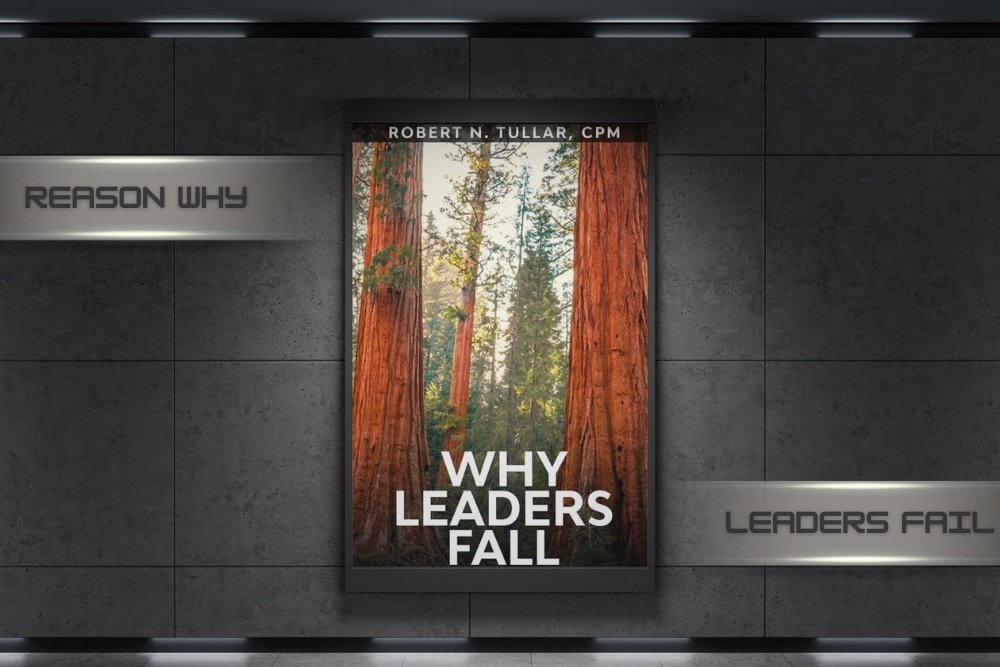
Even well-intentioned leaders often derail their teams, damage trust, and stall their own growth without fully understanding why. They work harder, stay later, and shoulder more responsibility—yet results deteriorate rather than improve. This disconnect between intention and impact is one of the most overlooked realities of leadership today.
The truth is uncomfortable but essential: leadership failure is rarely about laziness or lack of commitment. Instead, it usually stems from blind spots—gaps in self-awareness, emotional discipline, communication, and strategic balance. These gaps quietly widen until the structure collapses. Understanding the reasons why leaders fail is the first step toward preventing that collapse.
Robert N. Tullar’s Why Leaders Fall: A Journey Through the Redwoods offers a powerful framework for diagnosing these failures. Using the metaphor of towering Redwoods that depend on interconnected root systems, Tullar shows how leaders fall not from storms alone, but from weakened foundations. The encouraging news is that these leadership pitfalls are well-documented and avoidable. Learning from proven leadership insights allows leaders to replace fragility with resilience.
For a comprehensive starting point, we’ve compiled the essential titles from our blog into “Best Leadership Books to Read In 2025: Must-Read Titles for Ambitious and Growth-Driven Leaders,” which highlights some of the most influential leadership books of 2025 and practical insights for leaders.
1: The 5 Most Common Leadership Mistakes
Mistake 1: Poor Communication and Lack of Transparency
One of the most consistent reasons is ineffective communication. Leaders often assume clarity when none exists. They believe their intent is obvious, yet teams operate with incomplete or conflicting understanding.
Symptoms include misalignment, declining trust, repeated mistakes, and quiet disengagement. People stop asking questions because they feel unheard or unsafe.
The root cause is not silence, but assumption. Leaders speak without confirming understanding, forgetting that authority does not equal clarity.
In Why Leaders Fall, Tullar emphasizes that isolation weakens judgment. When leaders fail to communicate openly, they detach themselves from their own forest. The avoidance strategy is practicing “active clarifying”—restating goals, inviting feedback, and verifying alignment. Clear communication is not repetition; it is reinforcement.
This lesson places Tullar’s work among essential books about why leadership fails, because it reveals how failure often begins with something deceptively simple.
Mistake 2: Inability to Adapt or Embrace Change
Another major contributor to the reasons why leaders fail is rigidity. Markets shift, people evolve, and organizations grow—but some leaders cling to methods that once worked.
The symptoms appear as stagnation, missed opportunities, and teams that feel constrained rather than inspired. Innovation slows because adaptability is discouraged.
The root cause is a fixed mindset, often driven by fear of losing control or appearing uncertain. Tullar warns that leaders who stop learning begin falling long before the impact is visible.
The avoidance strategy is building “learning loops” into leadership rhythms. Quarterly reflection, honest reviews, and openness to correction allow leaders to adapt without losing direction. Redwoods survive centuries not by resisting change, but by bending without breaking.
This insight connects Why Leaders Fall to the most respected books on reasons for leadership failures, which consistently highlight adaptability as a survival skill, not a weakness.
Mistake 3: Neglecting Team Development
A third of the reasons stem from neglecting the growth of others. Leaders become indispensable to everything—and eventually, everything depends on them alone.
The symptoms include burnout, stalled innovation, and the absence of future leaders. When the leader stumbles, no one is prepared to step forward.
The root cause is over-reliance on self and under-investment in people. Tullar’s Redwoods metaphor illustrates this clearly: trees survive because roots intertwine. Leaders who grow alone fall alone.
The avoidance strategy is intentional development. Implementing a monthly “growth delegation” plan—assigning responsibility with coaching—creates strength throughout the system. This transforms leadership from control to cultivation.
This lesson firmly places Tullar’s work among books on leadership lessons from failures, emphasizing that leadership collapse often reflects what was never built beneath the surface.
Mistake 4: Decision-Making Based on Ego or Fear
A few reasons why leaders fail are as destructive as emotionally driven decisions. Ego pushes leaders toward risk; fear pulls them into paralysis. Both distort judgment.
Symptoms include volatile morale, inconsistent direction, and high-risk failures that could have been avoided. Teams feel unstable because leadership responses are unpredictable.
The root cause is a lack of emotional and strategic discipline. Tullar highlights the importance of inner-core roots—integrity, humility, and self-control—as anchors in moments of pressure.
The avoidance strategy is applying the “10-10-10 Rule”: How will this decision affect us in 10 minutes, 10 months, and 10 years? This simple pause restores perspective and reduces impulsive leadership behavior.
These insights align Why Leaders Fall with respected books on leadership failures and lessons, which repeatedly show that unchecked emotion erodes trust faster than poor strategy.
Mistake 5: Failing to Define and Communicate Vision
One of the most overlooked reasons is the absence of a compelling vision. Teams may be busy, but they are not inspired.
Symptoms include aimless effort, low morale, and high turnover. People work hard but feel disconnected from purpose.
The root cause is leadership consumed by daily tasks, losing sight of the “why.” Tullar cautions that leaders must periodically step back to see the forest, not just the trees.
The avoidance strategy is creating a one-page “Team Purpose” document that clarifies mission, values, and direction. Vision anchors effort and unites action.
This theme resonates deeply with books about lessons from leadership mistakes, reminding leaders that direction matters as much as execution.
2: The Learning Mindset – How to Turn Awareness into Action
Understanding the reasons why leaders fail is not enough. Awareness without action changes nothing. Leadership growth requires a shift from reactive behavior to intentional learning.
Tullar repeatedly emphasizes that experience alone does not equal wisdom. Leaders grow by reflection, humility, and curiosity. The Redwood continues strengthening its roots even after reaching full height.
To cultivate the agile, forward-thinking mindset today, explore the perspectives in our blog “New Leadership Books 2025 That Are Changing the Way Leaders Think and Succeed,” which compiled some essential key traits to succeed in your leadership journey.
Actionable Step: Dedicate 30 minutes each week to focused reading or reflection on one leadership weakness. Growth compounds when practiced consistently.
3: Building Resilience – The Core of Sustainable Leadership
Resilience is the difference between leaders who collapse and leaders who recover. Another critical layer of the reasons to fail in leadership is the absence of resilience when failure inevitably occurs.
Tullar reframes failure as exposure, not disqualification. A fall reveals what was missing—not what was worthless. Leaders with strong root systems bend, absorb impact, and rise again.
True resilience combines mindset, grit, and calm decision-making. For a deeper exploration and curated insights, visit our blog “Best Resilient Leadership Books: Strengthen Your Mindset, Grit & Decision-Making,” which offers valuable direction.
Actionable Step: Start a “failure log” to document setbacks objectively. Analyze without judgment, extract lessons, and move forward stronger.
4: Your Personalized Leadership Development Plan
At this point, the reasons why leaders fail should feel personal—not theoretical.
Self-Assessment Prompt: Which of the five leadership mistakes do you recognize most in yourself?
Create a “Fix-One” Plan by choosing one area to focus on for the next quarter. Sustainable growth happens one disciplined change at a time.
For structured guidance that turns insight into daily practice, the practical manuals, case studies, and some of the curated leadership books, see our blog “Best Leadership Books 2025 That Can Be Helpful In Your Leadership Journey.“
Actionable Step: Pair your chosen focus area with one book and apply one principle each week.
Conclusion: From Failing to Learning
Leadership failure is not a character flaw—it is a skill gap. The reasons why leaders fail are predictable, preventable, and deeply human. Awareness is the first step; disciplined action is the next.
By identifying common mistakes, strengthening foundations, and committing to lifelong learning, leaders transform failure from an endpoint into a turning point. Tullar’s Why Leaders Fall reminds us that no leader stands alone—and no leader has to fall permanently.
Your leadership journey is unique, but you don’t have to walk it alone. Let the lessons from those who have studied, failed, and risen again guide your path forward.
